

What Exactly Is Lorem Ipsum?

What Exactly Is Lorem Ipsum?

“Lorem ipsum dolor sit amet, consectetur adipiscing elit”. If you’ve ever seen this text and been confused about what it means (or even what language it’s in!), you’re not alone. More often than not, whenever lorem ipsum is used it leads to more confusion and questions than anything else. But with a little explanation, lorem ipsum can become something less feared and more understood.

Lorem Ipsum: What, Why, and When

The biggest question that goes unanswered is: Just what is lorem ipsum, anyway? Lorem ipsum is simply placeholder text that’s used to see how graphical elements like fonts, icons, and layouts will look when put together on a page. It has roots in Latin but various words have been altered, added, and removed over time so that the result is purely nonsensical filler text rather than meaningful content.

But why use lorem ipsum when you could just type “test test test” or simple English placeholder text? The problem with using plain text like “test” is that it looks unprofessional and doesn’t give you an accurate idea of how the layout will look with real content in place. Repeating the same short words like “test” over and over can throw off measurements for containers and columns, since real content will have varying word lengths.

Lorem ipsum provides a balance – it’s not distracting and readable like plain English, but also gives you realistically distributed letter and word lengths to see the impact on line wrapping, white space, etc. The nonsensical nature prevents it from attracting too much attention while you focus on design elements.

When Should You Use Lorem Ipsum?

Lorem ipsum is commonly used in:

  • Wireframe design – Place lorem ipsum into simple layout prototypes to get a feel for information hierarchy and positioning without distraction

  • Graphic design – Drop lorem ipsum text into brochures, flyers, posters, etc. to preview typography and determine ideal font sizes/styles

  • Web/UI design – Fill lorem text into page components like headers, columns, sidebars, etc. to gauge spacing, flow, and responsive behavior

  • Presentations – Use lorem ipsum charts/graphs with “dummy data” for concept proofs before real data is available

  • Printing – Lorem ipsum provides realistic text for printer tests to confirm formatting, pagination, etc. without wasting paper

Essentially any time you need placeholder text before final copy is approved, lorem ipsum is the standard dummy text of choice. The filler text allows you to focus on design aesthetics and core functionality rather than getting distracted by draft content.

Lorem Ipsum Generating Tools

Typing lorem ipsum by hand can be tedious, so online lorem ipsum generators make it quick and easy to grab dummy text. Here are some top tools:

  • Lipsum.com – Simple lorem ipsum generator with option for paragraphs or a full page

  • Meettheipsums.com – Get lorem ipsum text tailored to various topics like food, movies, travel, etc.

  • Loripsum.net – Customize number of paragraphs, sentences, and format (text vs HTML)

  • Baconipsum.com – For a fun twist, generate bacon-themed lorem ipsum text

Don’t Copy Lorem Ipsum to a Live Website!

One final word of caution when using lorem ipsum – make sure you replace it with real content before your website or materials go live. Search engines penalize pages with “gibberish” text, and visitors expect to see meaningful information on a finished site. Lorem ipsum is for draft purposes only!

The bottom line is that lorem ipsum is a handy text tool for mockups and prototypes, giving you filler copy that looks more realistic than plain “test” text without becoming distracting like actual content. With the multitude of lorem ipsum generators available, it’s easy to grab dummy text and see how your layouts shape up before pouring in the real content.

Get Expert Help with Web Design and Development

Hopefully this article has helped demystify lorem ipsum and illuminated how it can be a useful tool for testing web design and other projects. But lorem ipsum is just one small piece of building a professional digital presence.

For over 25 years, the web design and development experts at Infogenix have been creating custom websites, programming complex web applications, optimizing sites for maximum visibility, and helping businesses succeed online.

With our decades of experience planning, designing, building and launching hundreds of websites, we have the knowledge to make your web presence stand out from competitors and achieve your online goals. Whether you need a completely new website, ecommerce portal, mobile app, visual rebrand, or anything in between, we have the skills to bring your vision to life.

If you’re looking to take your website and online marketing to the next level, contact Infogenix today. Our team would love to discuss your needs and show you samples of our work. With our expertise guiding your project, you can leverage the power of the web to grow your business and connect with customers. Discover how we’ve helped companies thrive online for over 25 years!

Elevate Your Small Business Website with Infogenix’s Design Expertise

Elevate Your Small Business Website with Infogenix’s Design Expertise

In today’s digital age, having a website is essential for businesses to establish their online presence and reach a broader audience. However, just having a website isn’t enough. The design plays a crucial role in attracting and retaining visitors, as well as converting them into customers.

Website design involves various elements, including layout, color scheme, typography, navigation, and branding, all of which contribute to the user experience and impact the success of your site.

This blog offers tips for optimizing website design to improve user experience, boost search engine visibility, and convert visitors into customers. Whether you’re a small business owner or a marketing professional, these insights will help you create a website that stands out and drives results.

Understanding the Basics of Website Design

In today’s digital age, having a website is essential for any business. However, just having a website isn’t enough. It needs to be visually appealing, user-friendly, and optimized for search engines. This section covers the basics of website design and offers tips on how to create a site that attracts and retains visitors.

  1. Importance of Responsive Design
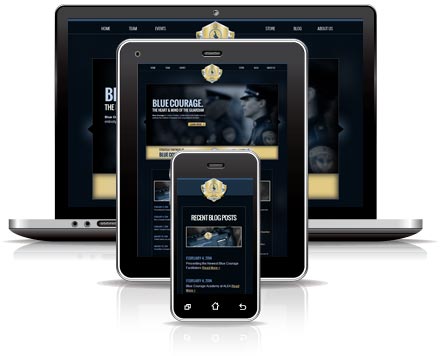
    Responsive design ensures your website adapts to different devices, crucial for mobile users. A mobile-friendly site prevents visitors from leaving for a competitor’s site.
  2. Choosing the Right Color Scheme
    Your website’s color scheme should align with your brand identity and evoke the desired emotions in visitors. Opt for colors that are easy on the eyes and provide good contrast.
  3. Importance of Typography
    Typography affects readability and brand consistency. Use fonts that are easy to read and employ hierarchy to guide visitors through your site.
  4. Creating a User-Friendly Navigation
    Organized, intuitive navigation helps visitors find what they’re looking for. Ensure your navigation is clear, descriptive, and easy to use on all devices.

Optimizing Your Website for Search Engines

Just having a website isn’t enough; it must be optimized for search engines to be visible to potential clients. SEO helps your site rank higher in search engine results, increasing visibility and traffic.

  1. Importance of SEO for Website Design
    SEO is integral to design, boosting search engine rankings and visibility. Continuous effort is required to maintain and improve your ranking.
  2. Tips for Optimizing Content
    Ensure content is relevant, informative, and engaging. Use keywords strategically without stuffing, and maintain high content quality.
  3. Importance of Meta Descriptions and Title Tags
    Meta descriptions and title tags summarize your content for search engines, helping improve your site’s visibility. Ensure they are relevant and include keywords.
  4. Importance of Mobile Optimization
    With increasing mobile usage, mobile optimization is critical. A responsive design ensures your site looks great on all devices, which is vital for SEO.

Creating a Strong Brand Identity

In a competitive market, a strong brand identity is crucial. Your website design plays a key role in conveying your brand’s values and connecting with your audience.

  1. Importance of Branding in Website Design
    Your website is often the first impression of your brand. It should reflect your brand’s values, mission, and personality consistently across all platforms.
  2. Tips for Creating a Strong Brand Identity
    Understand your target audience and design your website to meet their preferences. Use customer insights to tailor your design effectively.
  3. Importance of Consistency in Branding
    Consistency across all channels builds brand recognition and trust. Ensure your visual identity is uniform across your website, social media, and marketing materials.
  4. Importance of Visual Elements in Branding
    High-quality visuals like images and videos enhance your brand identity. They should align with your brand’s personality and create a positive impression.

Converting Visitors into Customers

A well-designed website not only looks good but also converts visitors into customers. Here’s how to create a site that drives conversions:

  1. Create Effective Calls-to-Action
    • CTAs should be clear, concise, and prominently displayed. Use action-oriented language that encourages visitors to act.
  2. Use Social Proof
    • Include testimonials, reviews, and case studies to build trust. Social proof helps alleviate doubts and encourages visitors to take the next step.
  3. Focus on User Experience
    • A positive UX is crucial for conversions. Ensure your site is easy to navigate, fast-loading, and mobile-friendly, with clear language and minimal distractions.
  4. Offer Value
    • Provide free resources like e-books or guides to establish your expertise and build trust. Offering value can encourage visitors to engage further.

Moving Forward with Your Website Design

A well-designed website is more than just a digital storefront; it’s a powerful tool that can attract visitors, convey your brand’s identity, and convert potential customers into loyal clients. By focusing on user experience, strong branding, effective SEO, and clear calls-to-action, you can create a website that not only looks great but also drives meaningful results for your business.

If you’re ready to take your website to the next level, contact Infogenix. Our expert team is here to help you design a site that stands out and delivers real value. Let’s work together to build a website that truly represents your brand and meets your business goals.

Reach out to Infogenix today to start transforming your online presence.

Posted in SEO

6 SEO Best Practices for 2023

6 SEO Best Practices for 2023

With the buzz about AI and replacing humans percolating throughout the industry, is SEO still relevant in 2023? Yes! And more so than ever. Search Engine Optimization (SEO) is ever-evolving. As we step into 2023, it’s important for businesses to stay up-to-date with the latest SEO strategies to improve their online visibility and drive traffic to their websites. Although some of these strategies have shown consistent success over the past several years, it’s important to stay informed of the latest developments and trends in the industry to ensure that you’re optimizing your website to its fullest potential.

In this blog post, we’ll be sharing six SEO best practices that you should be implementing in 2023 to stay ahead of the competition and boost your website’s search engine rankings. So, whether you’re a seasoned SEO expert or just getting started, let’s dive in and discover what’s new in the world of SEO.

1. Use AI to Your Advantage

AI, or artificial intelligence, is an efficient tool for SEO for several reasons, but there are cautions to be mindful of. First, let’s talk about the advantages of using AI to help with SEO.

  • Speed and Efficiency: AI can process large data sets and provide insights faster than humans can. This can save SEO experts and marketers a lot of time and effort.
  • Accurate Predictions: AI algorithms can analyze patterns and predict future outcomes with a high degree of accuracy. This can help SEO experts and marketers make informed decisions about their strategies and optimize their efforts accordingly.
  • Competitor Analysis: Knowing what your competitors are doing and what is working for them is an important part of any SEO strategy. AI can do the dirty work for you by keeping a digital eye on the competition and providing valuable feedback and analysis on strategies that are working. This can help SEO experts stay ahead of the curve and optimize their strategies for maximum impact.
  • Keyword Research: Finding the right keywords has always been important for ranking a website for what people are searching. Keyword research can be a long a tedious process. However, AI can simplify this process by assisting in identifying the most relevant keywords, variations, and semantically related terms. Using AI can enable SEO experts to create highly focused and efficient campaigns that resonate better with the target audience.
  • Automation: Routine tasks that take up a lot of time can be automated with AI. As mentioned, AI can automate keyword research, content optimization, and link building, freeing up time for SEO experts to focus on more strategic tasks.

Cautions When Using AI

With all of the great things that come with AI, there are some cautions to be aware of. Here are just a few.

  • As advanced as it is, AI isn’t 100% accurate 100% of the time, it is still learning and can make mistakes. Therefore, it is important to review and verify the information, analysis, and recommendations that AI provides.
  • According to John Mueller on Search Engine Land, Google considers AI-generated content spam. Mueller stated, “Content written by AI falls under the category of auto-generated content, which could lead to a manual penalty.” However, since Google heavily uses AI to improve user experiences, many SEOs argue that if you work through the content to provide a good user experience and don’t use it to spam content, then you should be fine. All we are going to say is, to proceed with caution.

2. Optimize for Your Clients

In the past, many websites were optimized to please search engines to achieve higher rankings on search results pages with the goal of generating more traffic. However, it is a far better strategy to optimize your website to meet the needs of your users. To create a good user experience, here are some tips to follow.

  • Understand your audience: Before optimizing your website, gain as much understanding about your target audience. Use data analytics tools to gather insights about your audience’s demographics, interests, and online behavior.
  • Simplify the navigation: Make sure your website navigation is easy to use and intuitive. Users should be able to find what they are looking for quickly and easily. Use clear and concise language for navigation labels and organize content logically.
  • Provide quality content: Provide valuable and relevant content that meets the needs of your audience. Use simple language, break up content into manageable sections, and use visual aids such as images, videos, and other graphics.
  • Focus on speed: Website speed is critical for the best user experience. No one likes to wait for a page to load. Google considers a mobile site that takes more than 2 seconds to load as too slow. Google prefers a mobile site to load under 1 second and looks at metrics like First Contentful Paint (FCP), Total Blocking Time (TBT), Largest Contentful Paint (LCP), and Cumulative Layout Shift (CLS). Ensure that your website loads quickly and doesn’t keep users waiting. Optimize images and videos, use caching, and minimize HTTP requests to improve website performance.
  • Use responsive design: Over 60% of internet traffic comes from a mobile device. Make sure that your website is optimized for all devices, including mobile, desktops, and tablets. Responsive design ensures that your website looks great and functions well on any device.
  • Use clear calls-to-action (CTAs): CTAs are an essential part of turning your site visitors into customers. Use clear and actionable language for your CTAs, and prominently display them in easy-to-find areas. It’s also good to use a few different types of CTAs.
  • Test and iterate: Regularly test your website’s usability and user experience to identify areas for improvement. Use A/B testing and user feedback to continually refine and optimize your website for your users.

3. Write Content for Quick Answers (Voice Search)

Optimizing a website for quick answers, including voice search, involves making changes to the website’s content and structure to provide concise and relevant answers to users’ search queries. Quick answers are the featured snippets that appear at the top of the search engine results page, providing an immediate answer to a user’s question.

To optimize a website for quick answers, the website owner should first identify the most common questions their target audience is asking related to their business or industry. Then, they should create content that answers those questions in a clear and concise manner.

Some key strategies for optimizing a website for quick answers include:

  • Identifying and targeting long-tail keywords that are commonly used in voice search and featured snippets.
  • Structuring the content in a way that is easy to read and understand, with subheadings and bullet points.
  • Including relevant images, videos, and other multimedia to enhance the user’s experience and engagement with the content.
  • Ensuring that the content is up-to-date and accurate.
  • Using schema markup to provide structured data that helps search engines understand the content of the page.

By optimizing a website for quick answers, website owners can increase the visibility of their website in search engine results, attract more traffic, and establish themselves as authoritative sources of information in their industry.

4. Optimize for Mobile First

Mobile-first optimization involves creating a website that is responsive and adapts to different screen sizes and devices. This approach takes into account that mobile devices are becoming the primary device for browsing the internet, and website owners need to ensure that their website is easily accessible and functional on mobile devices.

Some key strategies for optimizing a website for mobile-first include:

  • Using a responsive design that adapts to different screen sizes.
  • Prioritizing the most important content and features for mobile devices and simplifying the user interface.
  • Minimizing load times by optimizing images, videos, and other media for mobile devices (decreasing file size, specifying exact image size, and using a mobile-friendly file type).
  • Using mobile-specific features such as click-to-call and location-based services.
  • Ensuring that the website is easy to navigate with a mobile-friendly menu and clear call-to-action buttons.

By optimizing a website for mobile-first, website owners can improve their search engine rankings, increase engagement and conversions, and provide a better user experience for visitors accessing their website from mobile devices.

5. Include Short Videos About Products or Services

As popular social media apps regularly show us, short video clips get attention. Sometimes that attention goes viral. If a product or service brand is attached to the video, the advertising capabilities are priceless because of viral popularity. Short videos also help users gain a better understanding of products or services much more quickly than reading.

Some of the benefits of including short product or service videos include:

  • Improved engagement: Videos are more engaging than text or images alone. By providing a visual representation of a product or service, videos can capture the viewer’s attention and keep them engaged longer, which may increase the chances of them making a purchase or taking action.
  • Increased understanding: Videos can help explain complex products or services in a way that is easy to understand. This can be particularly useful for technical or complicated products or services that may be difficult to explain with text alone.
  • Improved SEO: Including videos on a website can also improve search engine optimization (SEO). Videos can increase the time spent on a page, which can signal to search engines that the content is valuable and relevant. Additionally, videos can be optimized with keywords and tags to help them rank higher in search results.
  • Better conversion rates: According to a study by Hubspot, adding a video to a landing page can increase conversions by 86%. Videos can help build trust with potential customers by providing a more personal and humanized view of a product or service.

6. Optimization for Conversions: Know Your Sales Funnel

A savvy marketer understands the complete customer experience and journey. This creates different sales funnel actions depending on where the customer’s journey is at a given time.

Optimizing a website for conversions means making changes to the website with the goal of increasing the percentage of website visitors who take a specific action, such as making a purchase, filling out a contact form, or subscribing to a newsletter.

Conversion optimization involves analyzing website data, identifying areas that may be causing visitors to leave without taking the desired action, and making changes to improve the user experience and encourage visitors to take the desired action.

Some common techniques for optimizing a website for conversions include:

  • Simplifying the website design and navigation to make it easier for visitors to find what they are looking for.
  • Using clear and compelling calls to action (CTAs) to encourage visitors to take the desired action.
  • Creating landing pages that are specifically designed to convert visitors for a particular product or service.
  • Using A/B testing to test different versions of the website and identify which changes are most effective at improving conversion rates.
  • Making sure the website is mobile-friendly, as an increasing number of visitors are accessing websites on mobile devices.

The ultimate goal of conversion optimization is to create a website that is optimized to convert visitors into customers, subscribers, or other desired actions. By continuously monitoring and analyzing website data and making changes to improve the user experience, a website can become more effective at achieving its conversion goals.

Final Thoughts

A sales funnel is not a static effort to attract people to a store or website. Instead, it requires continuous and proactive optimization to keep up with current trends. Today, a successful sales funnel must capture and retain consumer attention throughout the entire customer journey. As marketers, it is essential to closely monitor and enhance the customer experience as they navigate the funnel.

Additionally, with the majority of sales funnels beginning on smartphones, creating mobile-first content is crucial to creating a memorable experience. Neglecting to optimize for voice searches can result in losing potential customers. To ensure a far-reaching campaign, keyword research is necessary to find the voice searches potential customers are using.

At Infogenix, we are passionate about search optimization and can improve your sales funnel’s effectiveness. Let us help you create memorable customer journeys. Contact us for a free consultation or visit our website for more information.

Posted in SEO