

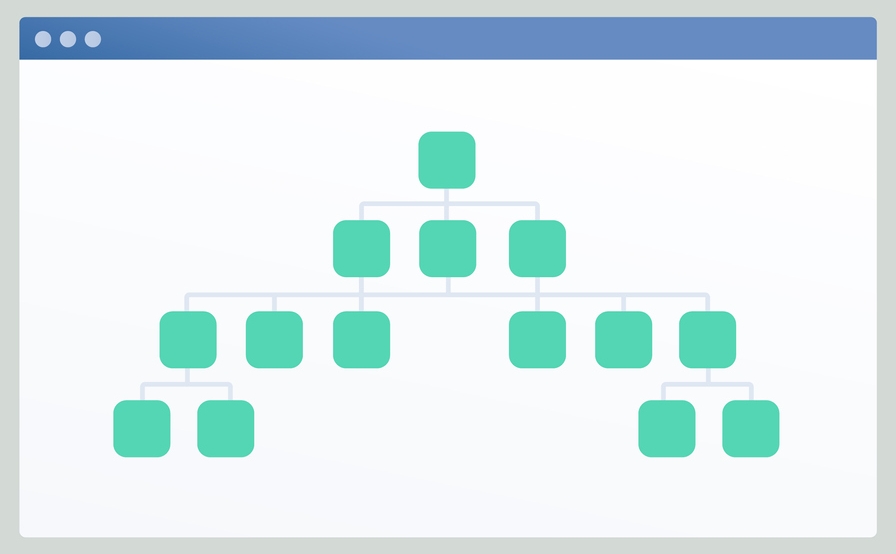
Search engine optimization improves your site’s page rankings, making it easier for potential customers to find your business. Whether you’re just starting a website or looking to drive more traffic to an existing site, one of the best ways to get results is to focus on site structure. Keep reading to learn more about why site structure is important and find out how you can use it to improve your search engine rankings.
Why Is Site Structure Important?
In simple terms, site structure is the way you organize the content on your website. A good structure is essential for delivering a positive user experience and boosting your search engine rankings It’s also part of your marketing funnel that leads people to become customers. From the visitor’s perspective, site structure is important because it influences how easy—or difficult—it is to find your products and services. If someone comes to your site and has to click page after page to find what they need, they might get discouraged and end up buying from one of your competitors.
Your site structure also helps Google and other search engines understand what each page is about. That makes it easier to determine if your site is relevant to specific keywords, which may improve your search engine rankings. For example, Google sees the pages in your navigation menu as some of the most important pages on your site. Those pages are likely to show up higher in the search engine results pages (SERPs) than pages that are buried under layers of other content.
Good site structure also has the following SEO benefits:
- It makes it easier to acquire high-quality backlinks to your site.
- Search engines will find new pages faster, giving you a boost in the SERPs.
- It’s easier to determine if you have duplicate content, which can affect your search engine rankings negatively.
9 Ways to Improve Your Site Structure for SEO
Now that you understand why site structure is so important, here are nine things you can do to make sure your site’s structure works for you instead of against you.
1. Think Carefully About the Right Structure for Your Site
When you’re choosing a site structure, you have several options. The most common is the hierarchy, which starts out with broad categories and then gets narrower as the user makes navigation decisions. Retail stores often use the hierarchical structure, as it makes it easier for customers to find specific products. Shoppers start out with a broad category like “Shoes” and then click through to sneakers, pumps, sandals, or other shoe types.
The database site structure is based on the use of metadata and tags. Although this structure makes it easier for users to search for relevant content, it’s also one of the most complex to maintain. A sequential site structure is appropriate for sites that only have a few pages of content. You may also want to use the sequential structure if you need visitors to see your content in a specific order. For example, a fitness trainer that offers a five-step program for losing weight might use this structure to ensure the steps are displayed in the correct order.
The matrix structure relies on internal links for navigation. It’s ideal for displaying a large amount of information without having to worry about creating complex navigation menus. An online glossary is a good example of a site that works well with the matrix structure, as the site owner doesn’t have to worry about visitors viewing the content in a specific order.
2. Choose Relevant Keywords
A good site structure starts with in-depth research to find out what keywords people are using to find your website. If you operate a business in the outdoor niche, you may want to look for keywords related to camping, fishing, boating, and canoeing. Once you have some general topics in mind, you can find more relevant keywords by drilling down into each topic. If you’re working on the fishing category, for example, you might want to look for keywords related to lures, live bait, tackle boxes, waders, and other relevant items.
Once you have a list of target keywords, you can start thinking about the best structure to use for your site. In this example, the hierarchical structure probably works best, as customers will be able to choose a broad category and then search for specific products within that category.
3. Structure Navigation Menus Carefully
Your navigation menu tells the search engine bots which of your site’s pages is the most important, so you need to structure each menu carefully. Many sites use horizontal menus, but you can also use vertical navigation bars, “hamburger” menus, or dropdown menus. The right choice depends on many factors, including how much content you have and how that content is organized. If your site has thousands of pages, you may want to use dropdown navigation, which allows users to click on a broad category and then choose a subcategory. Horizontal menus work well for sites with just a few pages, or for sites that have just a few broad content categories.
4. Avoid “Hiding” Content
If you want to deliver a positive user experience, you must make it as easy as possible for visitors to find what they need. Generally, a visitor shouldn’t have to click more than two or three links to find a specific product or service. Whether you’re building a website or updating a site’s existing structure, make sure that your navigation menus and internal links make it easy for users to find helpful content.
5. Focus on People, Not Search Engines
SEO is important, but that doesn’t mean you should focus exclusively on SEO and forget about everything else. It doesn’t matter how good your rankings are if people can’t find the information they need to feel comfortable buying from you. Fortunately, it’s possible to deliver a positive user experience and improve your page rankings at the same time. Writing high-quality content, formatting it in a logical way, and making it easy for users to find what they need can all boost your rankings and improve the user experience.
6. Make Your Content Scannable
If you open a webpage and see a huge wall of text, what do you do? Most people just exit the page and look for another site with the information they need. Part of having a good site structure is formatting your content so that it’s easy to read. Content should be highly scannable, which involves using header tags (H2, H3, etc.), bulleted lists, numbered lists, bold text, and other formatting elements. As the user’s eye moves down the page, these elements will guide them along, making the content easier to digest.
7. Use Breadcrumbs
Breadcrumbs are navigation tools that help visitors understand how the content they’re reading relates to other pages of content on the same website. Many retail stores use breadcrumbs to make it easy for users to navigate. For example, Bed Bath & Beyond has broad content categories. When a user clicks one of those categories, they’re presented with several subcategories, such as storage bins and boxes, storage cubes, storage baskets, and storage totes. Each of these pages leads back to the main category, making it easier for users to find what they need.
8. Maintain Balanced Categories
When possible, make sure your content categories are well-balanced. Generally, you shouldn’t have one category with two pages of content and another category with 500 pages of content. Try to have about the same number of pages assigned to each category to make it easier for search engines to crawl your site and understand what each page is about.
9. Keep Your Content Up to Date
For search engine users, there are few things more frustrating than when a website displays old information that’s no longer relevant. One common example of local events calendars. Someone looking for a weekend activity doesn’t want to know what activities were available 3 years ago. They want to find an activity they can do this weekend or sometime in the near future. The same rule applies to e-commerce sites that continue listing discontinued products even though there’s no chance of those products ever coming back into stock. It’s disappointing when someone searches for a product, finds a listing, and then realizes that the item is out of stock and has been discontinued.
Updating your site regularly is also essential for good SEO results. Every time you update a page, Google and other search engines notice that there’s something new, which gives you a little boost in the rankings. Refreshing existing content can also help you drive more traffic to your website, showing the search engines that your pages are relevant to users’ keyword searches. If you do a search on Google, you’ll notice a date under each meta title. When that date is several years old, users may wonder if the content is still relevant, prompting them to click links with more recent dates.
Fresh content is also helpful for maintaining good site structure, as it can make it easier to get rid of unneeded categories and make sure your site’s structure makes sense for what your typical visitor is trying to achieve. As you work through your older content, you may decide to consolidate some of it or delete it altogether, leaving fewer pages left to organize.
Partner with Infogenix for Better Site Structure
At Infogenix, we know the search engines inside and out. Our SEO experts know exactly how to develop a site structure that delivers a positive user experience and helps search engines understand what your site is all about. If you need help implementing these tips or getting better SEO results in general, contact our Utah SEO agency at (801) 724-7493 or request a free estimate. We have custom SEO services available to help your business succeed.