

It is the first question almost every business owner types into Google before contacting anyone: how much does a website cost? And the answers out there are almost uniformly frustrating. The DIY platforms tell you sixteen dollars a month. The agency websites tell you “it depends” and ask you to book a call. Neither answer helps you budget, and both leave you suspecting that somebody is hiding something.
After more than 25 years of building websites for Utah businesses, we can tell you the honest truth sits in between: “it depends” is genuinely true, but the things it depends on are completely explainable. Once you understand them, you can read any estimate — ours or anyone else’s — and know exactly what you are paying for.
Why Every Answer You Find Says “It Depends”
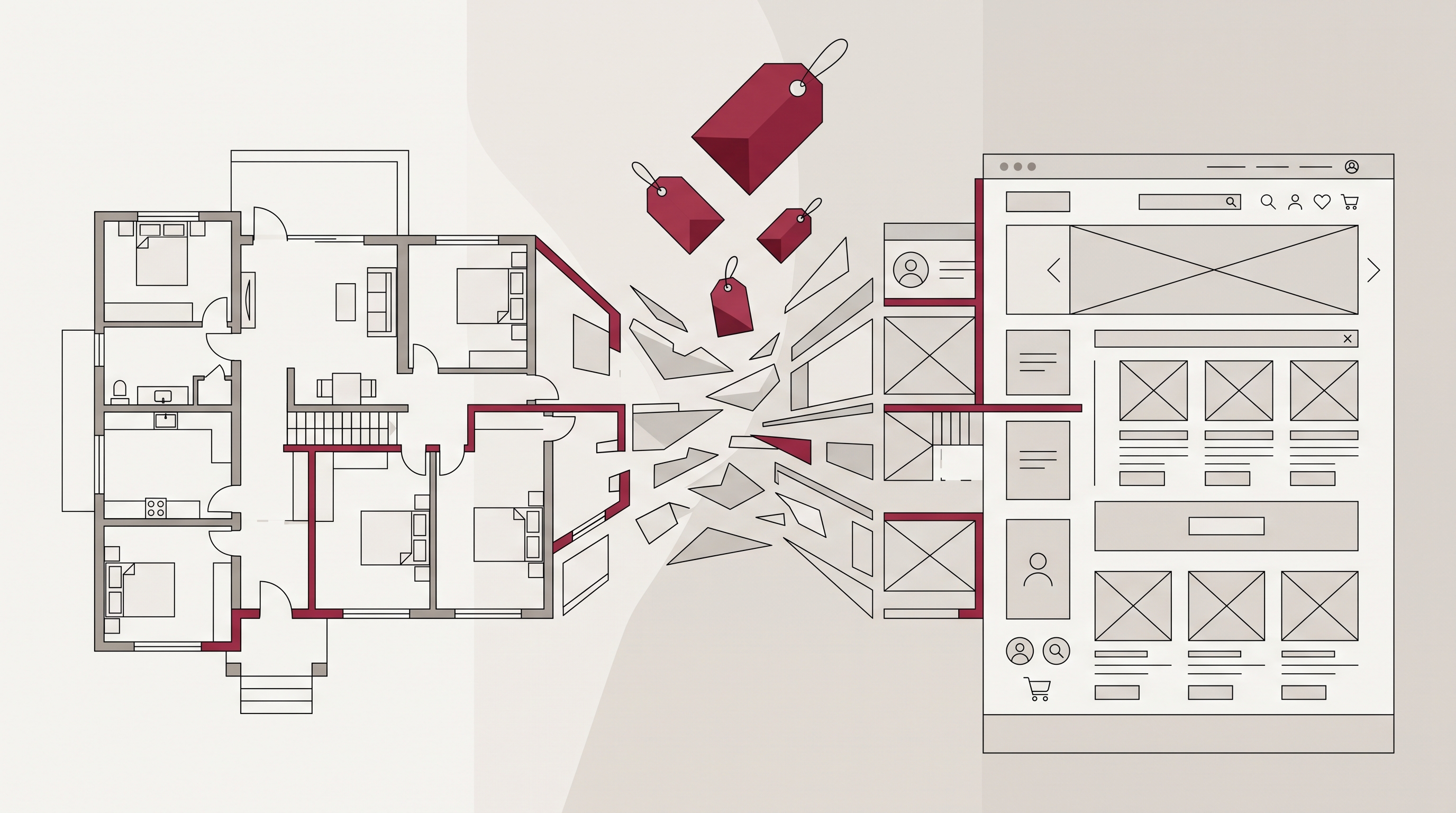
The confusion starts with the word “website” describing wildly different things. A five-page site introducing a service business, an online store with four hundred products, and a custom quoting portal for a manufacturer are as different as a shed, a house, and a commercial building — but they all get called a website.
The sixteen-dollar-a-month answers are pricing software subscriptions: you rent the tools and do all the work yourself. That is a legitimate path for some businesses at some stages — we wrote about the point where businesses outgrow templates precisely because templates are where many companies rightly start. But when people ask what a website costs, they usually mean professional work: strategy, design, development, and content built around their specific business. That is what the rest of this breakdown covers.
What Actually Drives the Price
Every honest estimate is built from the same handful of drivers. When quotes vary, it is because these vary:
Scope and structure. How many genuinely distinct page designs the site needs — a homepage, service pages, about, contact is one project; add locations, industries, resource sections, and careers, and the design and build hours grow with it.
Custom design versus customized template. A professional can dress up a template efficiently, and for some businesses that is the right call. Fully custom design — built from your brand, your customers, and your conversion goals rather than someone else’s layout — costs more and does more, because every element exists for a reason instead of surviving from the demo content.
E-commerce and functionality. The moment a site sells, complexity jumps: product catalogs, payment processing, shipping logic, tax handling, inventory, and the programming work that ties it together. Catalog size and checkout complexity move e-commerce budgets more than any other factor.
Integrations. Booking systems, CRMs, quoting tools, patient or client portals, financing applications — each connection between your website and the systems that run your business adds development and testing time.
Content. Somebody has to write the pages and produce the photography. “We’ll supply the content” is where more website timelines die than anywhere else — and content produced professionally shows up in the budget honestly instead of costing you three stalled months.
The search foundation. A site can be built beautiful and invisible. Proper structure, speed, schema, and on-page fundamentals cost less built in than bolted on after you notice nobody is finding you.
Realistic Market Ranges
Every agency prices differently, and these are market patterns rather than anyone’s rate card — but Utah businesses shopping in 2026 generally encounter something like this: professionally customized template sites commonly land in the low-to-mid four figures. Fully custom small-business sites typically run from the high four figures into the mid five figures depending on scope. Custom e-commerce usually starts in the mid five figures and climbs with catalog and integration complexity. And once a project involves portals, custom applications, or complex business logic, it has left “website” territory and entered software development, where budgets are scoped like software.
If a quote lands dramatically below those patterns, the difference is coming from somewhere — usually template reuse, offshore hand-offs, thin content, or a build that will need replacing in two years. Sometimes that trade is acceptable. It should just be a trade you chose, not one you discover later.
The Costs After Launch
The launch price is not the whole picture, and a trustworthy estimate says so out loud. Websites carry ongoing costs: hosting, software and security updates, backups, and support when something needs changing. None of these are large individually, but a proposal that never mentions them is either hiding them or planning to disappear after launch. Ask every company you talk to what happens in month two.
The Cheap Website Is Often the Expensive One
Here is the math that gets missed. A website is not a cost that sits on a shelf — it is the last step of your marketing funnel, working every day. A site that converts even slightly better pays its own difference many times over; we broke down that dynamic in why some businesses get more calls without getting more traffic. The genuinely expensive website is the cheap one that greets every visitor your marketing earns and quietly sends them away — and then needs a full rebuild eighteen months in anyway. Utah is full of businesses on their second or third website in five years. Building it right once is almost always the cheaper path.
How to Get a Website Design Estimate That’s Actually Accurate
The accuracy of any estimate is set by the quality of the conversation that produces it — and this is true whether you talk to us or anyone else in Utah County. Come prepared with four things: what the site needs to accomplish in business terms (calls, bookings, sales — not “look modern”), two or three sites you admire and why, the functionality you know you need, and an honest picture of your content situation. Then pay attention to the questions the company asks you. A web design company that starts quoting before understanding your business is pricing a template with your name on it. The ones worth hiring diagnose before they prescribe.
A Quick Reality Check
Before you request estimates, four questions worth answering for yourself:
- What is this website’s job, in one sentence, in business terms?
- What is a new customer worth to you — and what would one more per week justify spending?
- Which functionality is essential on day one, and which can be phase two?
- Who is actually going to produce the content, and by when?
Walk into estimate conversations with those answers and you will get proposals you can genuinely compare — and you will immediately recognize which companies did their homework on you.
If you would like a real number instead of a range — scoped to your business, your goals, and your content situation — request an estimate and we will give you an honest one. We have been building websites for Utah businesses for more than 25 years, and the estimate conversation is free either way.
Frequently Asked Questions
How much does a website cost in Utah? It depends on scope: professionally customized template sites commonly run in the low-to-mid four figures, fully custom small-business websites typically range from the high four figures into the mid five figures, and custom e-commerce generally starts in the mid five figures. The honest drivers are scope, custom versus template design, functionality, integrations, and content.
Why do website quotes vary so much between companies? Because companies are quoting different work: template customization versus fully custom design, thin placeholder content versus professionally produced content, and bare launch versus a build that includes search foundations and ongoing support. Comparing quotes line by line against those factors reveals what each price actually includes.
Is a custom website worth it compared to a template? Templates are a legitimate starting point for new businesses. Custom becomes worth it when the template starts costing you — when your business has outgrown generic structure, when conversion matters more than launch speed, or when your site needs functionality templates cannot deliver. The right question is not template versus custom, but which stage your business is in.