

One of the most common assumptions in marketing is that more traffic leads to more business. More visitors, more clicks, more impressions, more exposure. It sounds logical, and sometimes it is true. But after more than 25 years of working with Utah businesses, we have noticed something interesting: some companies increase their inquiries without significantly increasing their traffic. The number of visitors stays relatively flat, yet the calls go up. The form submissions go up. The conversations go up.
So what changed? Usually not the traffic. Usually what changed was what happens after people arrive.
Traffic Gets Too Much Credit
Traffic is easy to measure. It is visible, it is simple, and it makes for impressive charts in monthly reports. But traffic is only the beginning of the process.
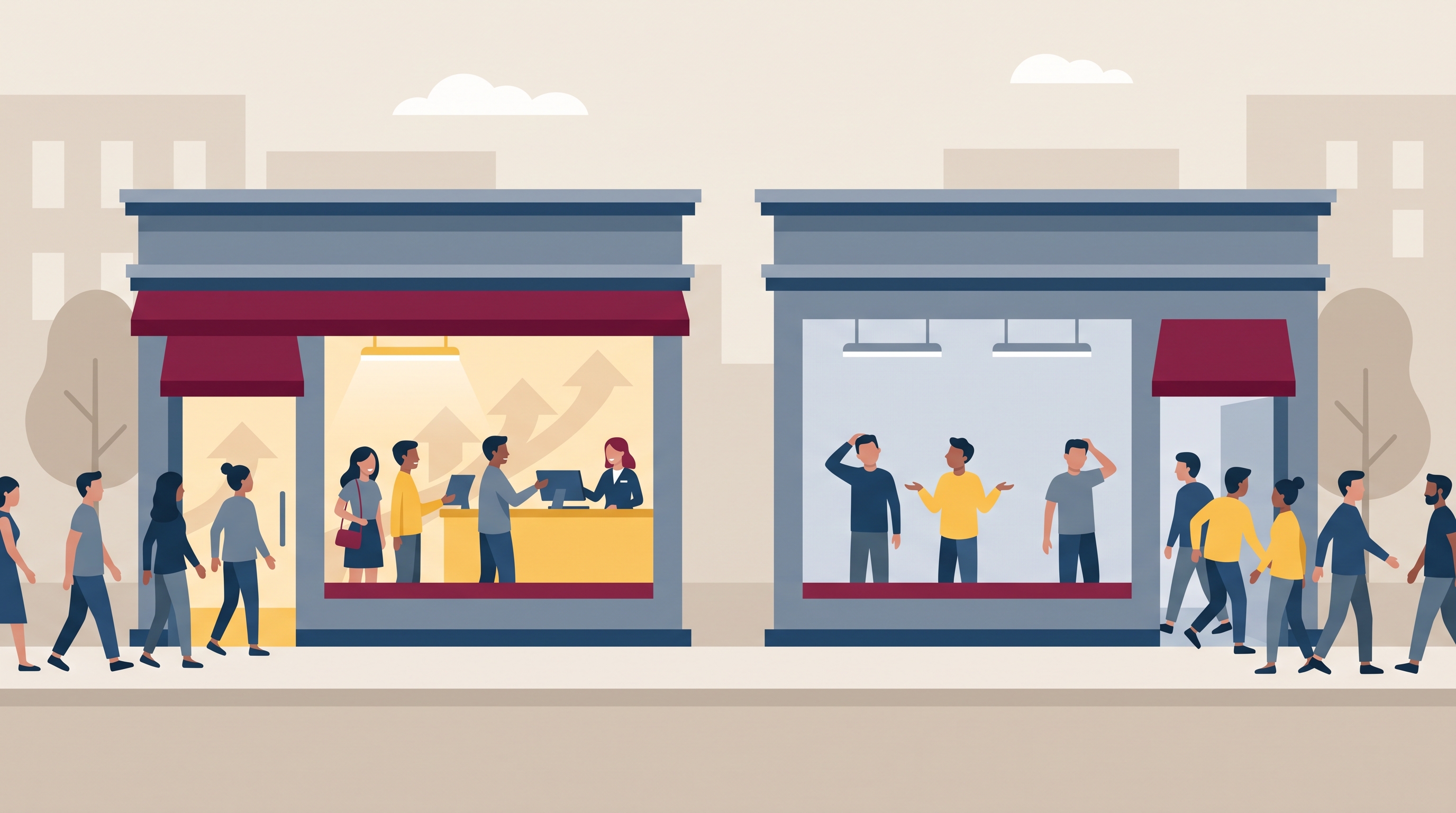
Imagine two storefronts on the same street here in Utah County. Both receive the same number of visitors every day. One consistently turns those visitors into customers. The other watches them browse and walk out. The difference is not foot traffic. The difference is what happens once people walk through the door.
Websites work exactly the same way.
Most Businesses Assume the Problem Is Visibility
When results feel slow, the natural response is to think “we need more people finding us.” Maybe. But there is often another possibility that gets overlooked: people are already finding you. They are simply not moving forward.
That is a very different problem, and it is usually a faster and less expensive one to fix. This is the entire discipline behind conversion rate optimization, and it is one of the most overlooked forms of lead generation available to Utah businesses.
More Visitors Does Not Automatically Mean More Leads
Think about how many times you have visited a website and left without taking action. You found the company. You looked around. Then something happened. Maybe you could not figure out exactly what they did. Maybe the site felt confusing. Maybe you were not sure the service was for someone like you. Maybe you simply did not feel confident enough to reach out.
That business had traffic. What it lacked was clarity. This happens every single day, on thousands of websites, and most owners never see it, because the visitors who leave quietly do not show up in any report.
Small Improvements Create Bigger Results Than Most Expect
Many business owners assume meaningful growth requires dramatic changes: a complete redesign, a major advertising budget, an aggressive new campaign. Sometimes it does. But often the biggest gains come from smaller improvements, like clearer headlines, better service descriptions, stronger calls to action, more obvious next steps, and tighter alignment between what someone searched for and the page they landed on.
None of those changes generate a single new visitor. They simply help the visitors you already have convert more effectively. And that is often enough to change a business’s month. It is also why we treat web design as a marketing tool first rather than a decoration, and why our SEO work pays as much attention to the page a searcher lands on as to the ranking that got them there.
People Do Not Contact Businesses They Do Not Understand
This sounds obvious, yet it is one of the most common issues we see online. Business owners spend years becoming experts in their field. The industry language becomes familiar. The process becomes obvious. The services become second nature.
Your customers do not share that perspective. They are seeing everything for the first time, and the more work it takes to understand what you do, the less likely they are to reach out. Confusion delays decisions. Clarity accelerates them.
Trust Often Matters More Than Traffic
Sometimes visitors understand exactly what a company does and still do not make contact. Why? Trust has not been established yet. People look for signals: reviews, testimonials, real examples of work, consistency, professionalism. They are trying to answer one simple question before they act: “Do I feel comfortable taking the next step?”
The businesses that answer that question well get better results from the same amount of traffic. In a market growing as fast as the Wasatch Front, where new competitors appear constantly, those trust signals are frequently the tiebreaker.
The Best Performing Websites Reduce Friction
Every website has friction. The only question is how much. Friction appears when information is hard to find, messaging is unclear, navigation feels confusing, or the next step is not obvious. Every obstacle is another opportunity for someone to leave.
Reduce the friction and more people keep moving forward. Not because more people arrived, but because fewer people left.
A Better Question to Ask
Businesses often spend enormous energy trying to attract new visitors while opportunities quietly slip away from the visitors they already have. So instead of asking “how do we get more traffic,” try asking “what percentage of our current traffic becomes a conversation?”
Because that is where growth often begins. Not with more visibility. With better clarity.
A Quick Reality Check
Take an honest look at your website and ask:
- Is it immediately clear what we do?
- Would a first-time visitor know exactly who we help?
- Is the next step obvious on every page?
- Are we making it easy for people to contact us?
If any answer feels shaky, the issue may not be traffic at all. People may already be finding you. They are just not finding enough reasons to take the next step. And that is one of the most overlooked opportunities a business has.
If you would like a second set of eyes on what your visitors experience after they arrive, reach out to our team — we have been helping Utah businesses turn traffic into conversations for over 25 years.
Frequently Asked Questions
Why is my website getting traffic but no leads? The most common causes are unclear messaging, weak calls to action, missing trust signals like reviews and examples, and a mismatch between what visitors searched for and the page they landed on. Fixing these usually costs far less than buying more traffic.
What is conversion rate optimization (CRO)? Conversion rate optimization is the practice of improving a website so a higher percentage of existing visitors take action — calling, filling out a form, or making a purchase — through clearer messaging, better page design, and reduced friction.
Should I invest in more traffic or better conversion first? If your site already receives steady visitors but few inquiries, improving conversion usually delivers a faster return, and it makes every future traffic investment more profitable, because each new visitor arrives at a site built to convert them.