

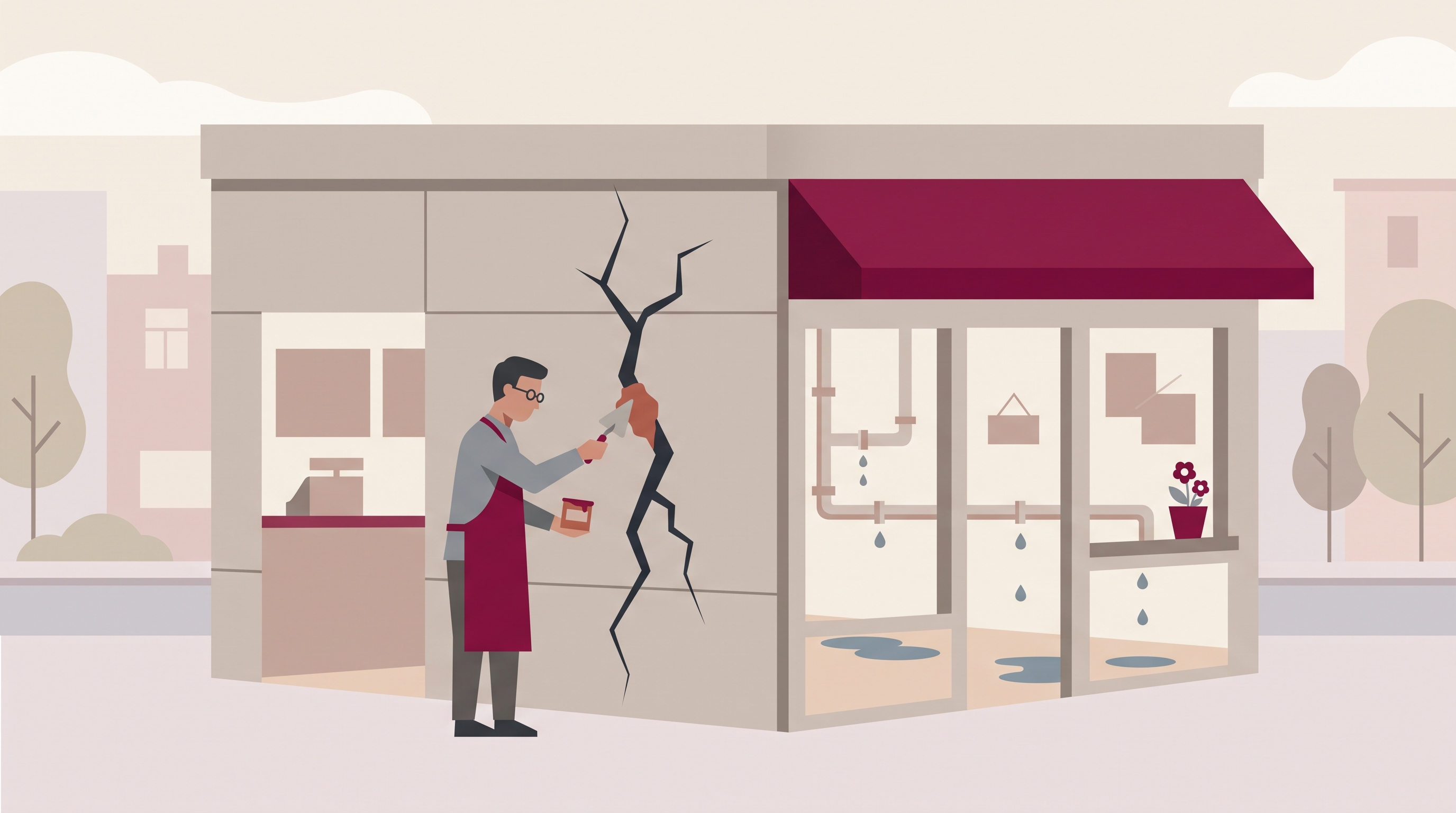
Why Businesses Often Fix the Wrong Problem First

Why Businesses Often Fix the Wrong Problem First

When business slows down, most owners do what they have always done: they look for the problem. That sounds reasonable. In fact, it is exactly what they should do. The challenge is that many businesses do not actually identify the problem. They identify the symptom. And symptoms have a way of pointing people in the wrong direction.

That is why so many companies spend time, money, and energy fixing things that were never the real issue to begin with.

Symptoms Are Easy to See. Problems Are Harder.

You notice fewer calls coming in. That is a symptom. You notice website traffic has dropped. That is a symptom. You notice leads are not converting. That is a symptom too.

What caused those things? That is the real question. Unfortunately, most businesses stop at the symptom, because the symptom is the most visible part of the problem.

The Website Becomes the Scapegoat

One of the most common examples is the website. Business slows down, the owner looks at the site, and the conclusion arrives almost automatically: “We need a new website.”

Maybe they do. Maybe they don’t. The website often gets blamed simply because it is visible. It is easy to point to, easy to criticize, and easy to replace. But replacing something does not automatically solve the issue that caused the slowdown in the first place. In our 25-plus years of designing and rebuilding websites for Utah businesses, we have seen redesigns transform companies — and we have seen businesses replace perfectly good websites while the actual problem sat untouched somewhere else.

The difference between those two outcomes is almost always the quality of the diagnosis that happened first.

“More Traffic” Is the Default Answer

Another common reaction is “we need more traffic.” Again — maybe. But not always.

Imagine a website receiving plenty of visitors. People are finding it. People are clicking. People are looking around. Yet very few are reaching out. That is not a traffic problem. That is a conversion problem, and bringing in more visitors simply exposes the same weakness to a larger audience.

The symptom says “we need more traffic.” The reality says “we need more clarity.” Those are very different solutions with very different price tags — we broke down exactly how that plays out in a recent post on why some businesses get more calls without getting more traffic. (Link to post #1 once published.)

Marketing Often Gets Blamed for Sales Problems

This one happens all the time. A business is not growing, and the immediate assumption is that the marketing is not working.

But sometimes the marketing is doing exactly what it is supposed to do. It is generating awareness. It is generating interest. It is creating opportunities. The breakdown happens later — follow-up is inconsistent, the sales process is unclear, or expectations are not aligned. From the outside, it feels like a marketing issue. In reality, it may be a sales issue, an operational issue, or a communication issue.

The symptom points in one direction. The problem lives somewhere else.

The Cost of Misdiagnosis

Fixing the wrong problem is not just frustrating. It is expensive. Every solution creates a new investment: a new website, a new ad campaign, a new software platform, a new vendor, a new strategy.

If the diagnosis is wrong, the solution rarely produces the desired outcome. And then something worse happens — the business owner becomes convinced that nothing works. When the truth is simpler: they solved the wrong problem.

Most Businesses Have More Than One Leak

Here is where it gets interesting. Rarely does one single issue create all the trouble. More often, there are several smaller gaps working together: a little confusion on the website, a little inconsistency in the messaging, a little friction in the sales process, a little uncertainty in the customer journey.

Individually, each issue feels manageable. Together, they create significant losses. The challenge is that people tend to focus on the largest visible symptom instead of looking at the entire system.

Why Stepping Back Matters

One of the most valuable things a business can do is stop asking “what’s wrong?” and start asking “where is the breakdown occurring?”

That is a different conversation. It forces you to look at how customers actually find you, what they see when they arrive, what they understand, what they do next, and where they stop moving forward. Suddenly the issue becomes much clearer — and often much smaller than expected.

This is, frankly, what good marketing consultants actually do. Not selling a predetermined solution, but tracing the customer journey until the evidence reveals where it breaks. In a market like Utah’s, where businesses are surrounded by agencies eager to sell them the next thing, diagnosis before prescription is what separates an investment from a gamble.

The Best Solutions Come After Better Questions

Business owners are problem solvers by nature. That is why many of them move quickly: see a problem, fix a problem, move on. But speed becomes a disadvantage when the diagnosis is incomplete.

Sometimes the fastest way to solve a problem is to spend a little longer understanding it. Because the right solution applied to the right problem almost always outperforms the wrong solution applied quickly.

A Better Question to Ask

Instead of asking “what do we need to fix?” try asking “what evidence do we have that this is actually the problem?”

That simple shift can save an enormous amount of time and money. Because symptoms are everywhere. Real problems are usually hiding underneath them.

A Quick Reality Check

Take the biggest challenge facing your business right now and ask:

  • Is this the actual problem, or a symptom of it?
  • What evidence supports that conclusion?
  • Where in the customer journey does the breakdown actually occur?
  • Have we identified the cause, or only the result?

If those questions are difficult to answer, there may be more opportunity in understanding the problem than in rushing toward a solution. For many businesses, that is exactly where the biggest improvements begin.

If you would like help finding where the breakdown is actually occurring — before spending money fixing the wrong thing — talk to our team. As a Utah digital marketing agency with more than 25 years of diagnosing exactly these situations, the first thing we will give you is evidence, not a pitch.

Frequently Asked Questions

How do I know if I need a new website or better marketing? Look at the evidence before deciding. If visitors arrive but do not take action, the issue is usually clarity, trust, or conversion — not the website’s age. If qualified visitors rarely arrive at all, visibility is the gap. A proper diagnosis traces the customer journey to find where people actually stop.

Why is my marketing not generating sales? Sometimes it is. Marketing’s job is creating awareness and opportunities; if those opportunities stall afterward, the breakdown may be in follow-up speed, the sales process, or unclear next steps. Separating marketing performance from sales performance is the first step in fixing the right thing.

What does a marketing consultant actually do? A good marketing consultant diagnoses before prescribing — auditing how customers find a business, what they experience on the website, where they stop moving forward, and what the data shows — then recommends solutions based on that evidence rather than a predetermined service.


Why Some Businesses Get More Calls Without Getting More Traffic

Why Some Businesses Get More Calls Without Getting More Traffic

One of the most common assumptions in marketing is that more traffic leads to more business. More visitors, more clicks, more impressions, more exposure. It sounds logical, and sometimes it is true. But after more than 25 years of working with Utah businesses, we have noticed something interesting: some companies increase their inquiries without significantly increasing their traffic. The number of visitors stays relatively flat, yet the calls go up. The form submissions go up. The conversations go up.

So what changed? Usually not the traffic. Usually what changed was what happens after people arrive.

Traffic Gets Too Much Credit

Traffic is easy to measure. It is visible, it is simple, and it makes for impressive charts in monthly reports. But traffic is only the beginning of the process.

Imagine two storefronts on the same street here in Utah County. Both receive the same number of visitors every day. One consistently turns those visitors into customers. The other watches them browse and walk out. The difference is not foot traffic. The difference is what happens once people walk through the door.

Websites work exactly the same way.

Most Businesses Assume the Problem Is Visibility

When results feel slow, the natural response is to think “we need more people finding us.” Maybe. But there is often another possibility that gets overlooked: people are already finding you. They are simply not moving forward.

That is a very different problem, and it is usually a faster and less expensive one to fix. This is the entire discipline behind conversion rate optimization, and it is one of the most overlooked forms of lead generation available to Utah businesses.

More Visitors Does Not Automatically Mean More Leads

Think about how many times you have visited a website and left without taking action. You found the company. You looked around. Then something happened. Maybe you could not figure out exactly what they did. Maybe the site felt confusing. Maybe you were not sure the service was for someone like you. Maybe you simply did not feel confident enough to reach out.

That business had traffic. What it lacked was clarity. This happens every single day, on thousands of websites, and most owners never see it, because the visitors who leave quietly do not show up in any report.

Small Improvements Create Bigger Results Than Most Expect

Many business owners assume meaningful growth requires dramatic changes: a complete redesign, a major advertising budget, an aggressive new campaign. Sometimes it does. But often the biggest gains come from smaller improvements, like clearer headlines, better service descriptions, stronger calls to action, more obvious next steps, and tighter alignment between what someone searched for and the page they landed on.

None of those changes generate a single new visitor. They simply help the visitors you already have convert more effectively. And that is often enough to change a business’s month. It is also why we treat web design as a marketing tool first rather than a decoration, and why our SEO work pays as much attention to the page a searcher lands on as to the ranking that got them there.

People Do Not Contact Businesses They Do Not Understand

This sounds obvious, yet it is one of the most common issues we see online. Business owners spend years becoming experts in their field. The industry language becomes familiar. The process becomes obvious. The services become second nature.

Your customers do not share that perspective. They are seeing everything for the first time, and the more work it takes to understand what you do, the less likely they are to reach out. Confusion delays decisions. Clarity accelerates them.

Trust Often Matters More Than Traffic

Sometimes visitors understand exactly what a company does and still do not make contact. Why? Trust has not been established yet. People look for signals: reviews, testimonials, real examples of work, consistency, professionalism. They are trying to answer one simple question before they act: “Do I feel comfortable taking the next step?”

The businesses that answer that question well get better results from the same amount of traffic. In a market growing as fast as the Wasatch Front, where new competitors appear constantly, those trust signals are frequently the tiebreaker.

The Best Performing Websites Reduce Friction

Every website has friction. The only question is how much. Friction appears when information is hard to find, messaging is unclear, navigation feels confusing, or the next step is not obvious. Every obstacle is another opportunity for someone to leave.

Reduce the friction and more people keep moving forward. Not because more people arrived, but because fewer people left.

A Better Question to Ask

Businesses often spend enormous energy trying to attract new visitors while opportunities quietly slip away from the visitors they already have. So instead of asking “how do we get more traffic,” try asking “what percentage of our current traffic becomes a conversation?”

Because that is where growth often begins. Not with more visibility. With better clarity.

A Quick Reality Check

Take an honest look at your website and ask:

  • Is it immediately clear what we do?
  • Would a first-time visitor know exactly who we help?
  • Is the next step obvious on every page?
  • Are we making it easy for people to contact us?

If any answer feels shaky, the issue may not be traffic at all. People may already be finding you. They are just not finding enough reasons to take the next step. And that is one of the most overlooked opportunities a business has.

If you would like a second set of eyes on what your visitors experience after they arrive, reach out to our team — we have been helping Utah businesses turn traffic into conversations for over 25 years.

Frequently Asked Questions

Why is my website getting traffic but no leads? The most common causes are unclear messaging, weak calls to action, missing trust signals like reviews and examples, and a mismatch between what visitors searched for and the page they landed on. Fixing these usually costs far less than buying more traffic.

What is conversion rate optimization (CRO)? Conversion rate optimization is the practice of improving a website so a higher percentage of existing visitors take action — calling, filling out a form, or making a purchase — through clearer messaging, better page design, and reduced friction.

Should I invest in more traffic or better conversion first? If your site already receives steady visitors but few inquiries, improving conversion usually delivers a faster return, and it makes every future traffic investment more profitable, because each new visitor arrives at a site built to convert them.

The Questions Utah Customers Try to Answer Before They Ever Contact You

The Questions Utah Customers Try to Answer Before They Ever Contact You

Most business owners think the sales process starts when the phone rings. Or when an email arrives. Or when someone fills out a form.

In reality, the sales process often starts much earlier.

Long before a conversation happens. Long before a lead appears. Long before you even know someone exists. Because before customers contact you, they’re trying to answer a series of questions.

And they’re using your website, your content, your reviews, and your overall online presence to find those answers.

After 25+ years of managing digital marketing strategies for Utah businesses at Infogenix, we’ve noticed that many companies never stop to think about what those questions actually are.

Customers Are Looking for Reasons to Move Forward

People rarely visit a website hoping to stay confused. They’re looking for confidence.

Not certainty. Confidence.

Enough confidence to take the next step. Enough confidence to make a phone call. Enough confidence to send a message.

Every question they answer brings them closer to that decision. Every unanswered question pushes them further away.

The First Question Is Usually Simple

Before anything else, customers are trying to determine:
“Do these people do what I need?”

That sounds obvious. Yet many websites accidentally make this difficult. Business owners become familiar with their own industry language. They know the terminology, the acronyms, and the details. Customers often don’t.

That’s why clarity matters so much. If someone can’t quickly determine what you do, they rarely stick around long enough to learn more.

The Second Question Is About Trust

Once someone understands what you do, another question appears:
“Can I trust them?”

This isn’t always a conscious thought. It’s often a feeling. People start looking for signals:

  • Reviews
  • Testimonials
  • Experience
  • Consistency
  • Professionalism

They’re trying to reduce uncertainty. Not eliminate it entirely. Just reduce it enough to feel comfortable moving forward.

The Third Question Is Often Overlooked

Many customers are wondering:
“Are they the right fit for me?”

This is different from trust. A customer might completely trust your company and still decide not to contact you. Why? Because they aren’t sure you’re the right fit.

Maybe your messaging feels too broad. Maybe they can’t tell who you typically work with. Maybe your custom web design talks to everyone and therefore feels like it’s speaking to no one.

The easier it is for someone to recognize themselves in your messaging, the easier it becomes to move forward.

People Are Trying to Predict the Experience

This is one of the most overlooked parts of marketing. Customers aren’t just evaluating your service. They’re trying to imagine what it will be like working with you.

Will it be easy? Complicated? Professional? Responsive? Frustrating? Helpful?

They’re collecting clues everywhere they can find them. And those clues begin shaping expectations before a conversation ever happens.

Most Websites Answer the Wrong Questions

A lot of business websites spend significant time talking about the company history, the founders, the office, or the mission statement.

None of those things are inherently bad. But they’re often not the questions customers are asking first.

Customers usually care more about:

  • Can you solve my problem?
  • Have you helped people like me?
  • What happens next?
  • Why should I choose you?

When those questions go unanswered, people keep searching.

Every Unanswered Question Creates Friction

Think about the last major purchase you made. The more uncertainty you felt, the longer the decision took. The same thing happens online.

When visitors can’t find answers, they don’t always contact you for clarification. They often leave. Not because they weren’t interested, but because another local company made the decision easier.

Many opportunities aren’t lost because of price, service quality, or competition. They’re lost because one company reduced uncertainty faster than another.

The Best Websites Don’t Try to Impress

They try to clarify. This is where many businesses get stuck. They focus on appearing impressive.

The reality is that most customers are simply trying to understand. They want clarity, direction, and confidence. The businesses that provide those things consistently tend to earn more conversations.

A Better Question to Ask

Instead of asking: “What information should we put on our website?”
Ask: “What questions are customers trying to answer before they contact us?”

That shift changes everything. Websites don’t exist to just share information. They exist to reduce uncertainty. And the businesses that reduce uncertainty fastest often win the opportunity.

A Quick Reality Check

Take a look at your website today and ask:

  • Can someone quickly tell what we do?
  • Would a visitor know who we typically help?
  • Does the site build trust without requiring a phone call?
  • What questions would still remain unanswered after someone leaves?

If those questions are difficult to answer, there may be more uncertainty in your customer journey than you realize.


Turn Browsers Into Buyers

At Infogenix, we know that a pretty website isn’t enough—it needs to answer the right questions at the exact right time. For over two decades, we’ve helped Utah businesses structure their websites and SEO campaigns to reduce friction and drive actual sales.

Stop losing customers to confusion. Contact the Infogenix team today and let’s build a digital presence that confidently answers your customers’ most important questions.