

Most Utah businesses approach digital advertising with a broad brush: “Target Salt Lake County,” “Target Utah County,” or even worse, “Target the whole state.”
But from a marketing perspective, Utah isn’t a single, flat market. It’s a complex ecosystem of tight, highly active micro-markets—bustling business parks, university zones, massive event venues, tech campuses, and seasonal hotspots. When you treat the state like one large, homogenous audience, you bleed ad spend on unqualified impressions.
Geofencing changes that dynamic entirely.
What Geofencing Actually Means in Modern PPC
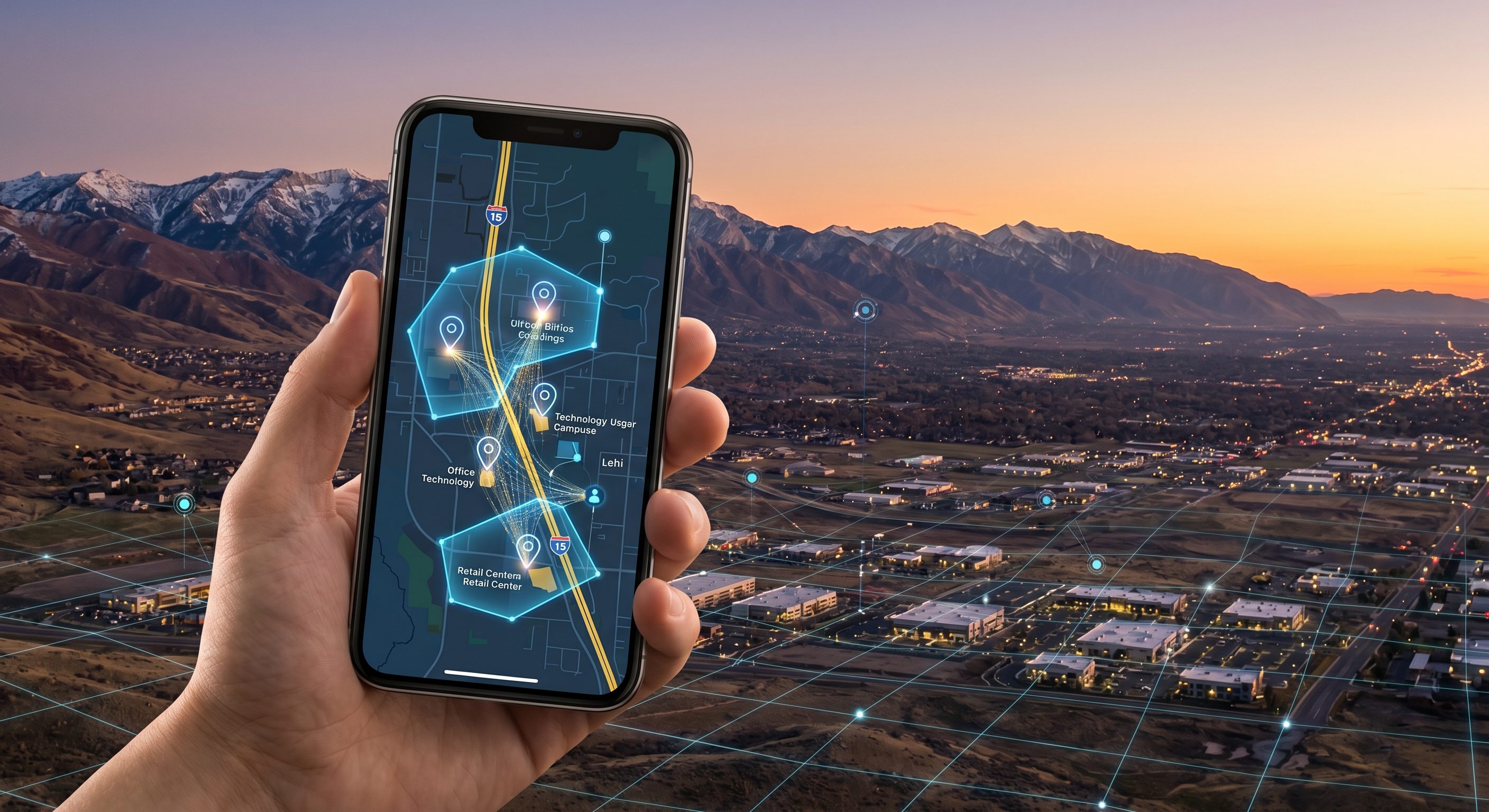
At its core, geofencing is a location-based digital marketing strategy that allows you to draw a virtual boundary (or “polygon”) around a specific geographic area. When mobile devices enter this defined space, they are captured in an audience pool, allowing you to serve highly targeted display, search, or social ads to those specific users.
It’s precision targeting scaled down to the square footage of:
- A tech campus in Lehi’s Silicon Slopes
- A massive trade show venue like the Salt Palace Convention Center
- High-traffic retail centers in Orem or Farmington
- University zones surrounding BYU, UVU, or the University of Utah
Instead of paying a premium to blanket an entire city, your PPC advertising budget is spent exclusively on users physically present in strategic, high-intent zones.
Why Spatial Targeting Thrives in Utah
Utah’s unique geographic and economic layout makes it a goldmine for hyper-local targeting. The state boasts:
- Extremely dense concentrations of tech and SaaS employees in the I-15 corridor.
- A robust year-round schedule of industry conventions, outdoor expos, and local events.
- Tight-knit university communities with distinct buying behaviors.
- Clearly defined retail and business park districts.
Because of this layout, physical location strongly correlates with purchasing intent. A homeowner attending the Salt Lake Home Show has a vastly different digital profile than someone casually browsing from their couch in Logan. Geofencing allows your messaging to meet that exact, real-world intent.
High-ROI Geofencing Use Cases
Geofencing isn’t just about brand awareness; it’s a bottom-of-the-funnel conversion tactic when deployed correctly. It works exceptionally well for:
- Event Sponsoring & Trade Shows: Capture the mobile IDs of attendees at a specific conference and serve them ads for your B2B software during and after the event.
- Competitor Conquesting: Draw a digital fence around a competitor’s physical storefront. When their customers walk in, serve them a compelling mobile ad offering a better rate or a discount to switch to your business.
- Account-Based Marketing (ABM): A B2B company targeting enterprise clients doesn’t need statewide reach; they just need digital presence inside specific corporate office buildings.
- Retargeting Foot Traffic: Capture audiences who visit your physical location and serve them tailored remarketing ads to drive repeat business.
The “Leaky Bucket”: Why Most Businesses Fail at Geofencing
Location precision is incredibly powerful—but only if your conversion system is aligned. Common mistakes businesses make when attempting local targeting include:
- Ignoring the Post-Click Experience: Sending hyper-local, hyper-specific traffic to a generic homepage instead of a custom landing page designed for conversion.
- Vague Messaging: Failing to make the ad creative highly relevant to the geofenced location (e.g., not mentioning the specific event the user is attending).
- Poor Attribution Tracking: Running campaigns without the proper pixel tracking to measure post-visit behavior, making it impossible to calculate true Return on Ad Spend (ROAS).
This ties directly back to a conversion-first mindset. The best targeting in the world won’t save a website that isn’t built to convert.
The Bigger Picture: Layering Your Strategy
In competitive Utah markets, marginal improvements in Cost Per Acquisition (CPA) make a massive difference. By competing exclusively inside intentional zones rather than bidding against the entire state, you radically alter your cost dynamics.
However, geofencing is not a replacement for a broader search strategy—it is a specialized layer.
When layered correctly alongside strong website design, a robust local SEO strategy, and revenue-based tracking, it becomes a precision growth tool. That’s exactly how our team at Infogenix integrates hyper-local targeting into comprehensive performance systems, ensuring your budget works smarter, not harder.
Digital marketing in Utah works best when you understand how physical movement influences digital behavior. When your targeting reflects that reality, your advertising stops feeling like a broad guess and starts functioning as a strategic, revenue-generating engine.